RadGuard (Final Year Project)
Catching AI hallucinations in radiology reports before they reach patients.
SWE (AI/MLOps)Medical AIMultimodalComputer VisionNLPPyTorchFastAPIMLOps
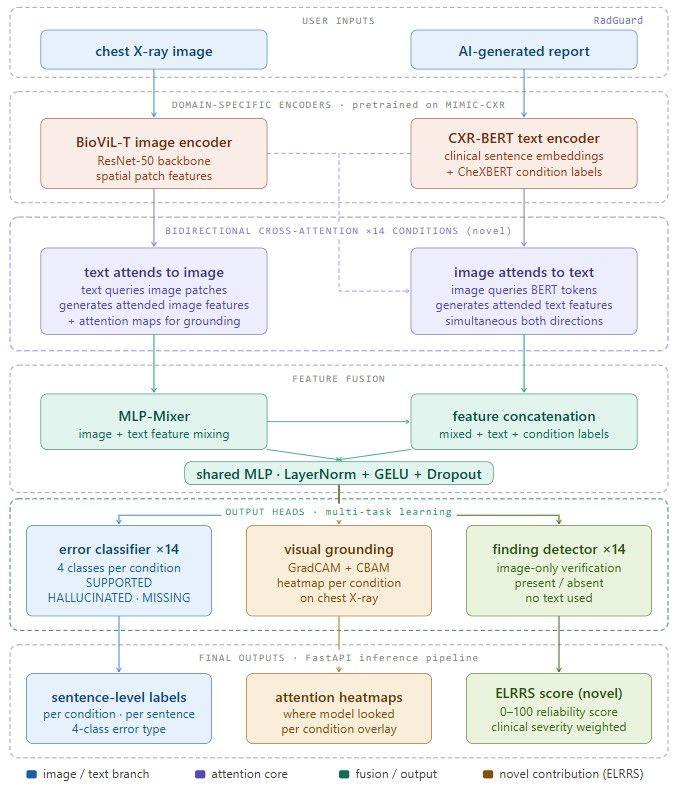
A FastAPI and PyTorch inference service deployed on HuggingFace Spaces (Docker SDK), paired with a React 18 and Vite frontend and a MongoDB backed partner API, all orchestrated through Docker Compose. Model versioning runs through MLflow, with weights hosted on the HuggingFace Hub and auto downloaded at inference time.

What I built
- Shipped a FastAPI inference service (/analyze endpoint) running PyTorch 2.x with automatic mixed precision, containerized and deployed on HuggingFace Spaces (Docker SDK, 2 vCPU / 16GB RAM).
- Built a three-service architecture, a React 18 and Vite frontend, a FastAPI and MongoDB partner backend, and the FastAPI AI engine, orchestrated together with Docker Compose and nginx.
- Set up a model registry with MLflow (SQLite backend) for experiment tracking, and hosted production weights on the HuggingFace Hub with automatic download at inference startup.
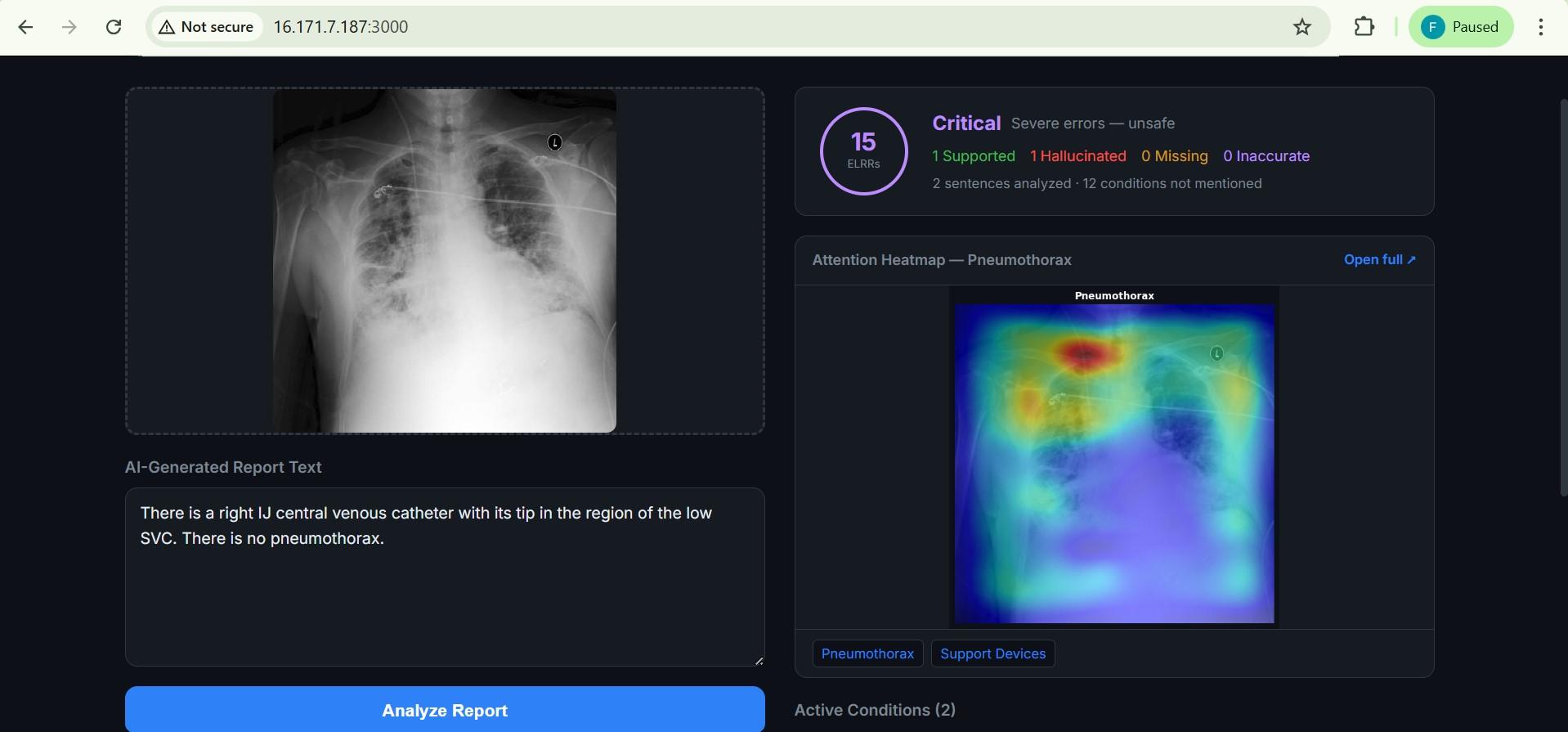
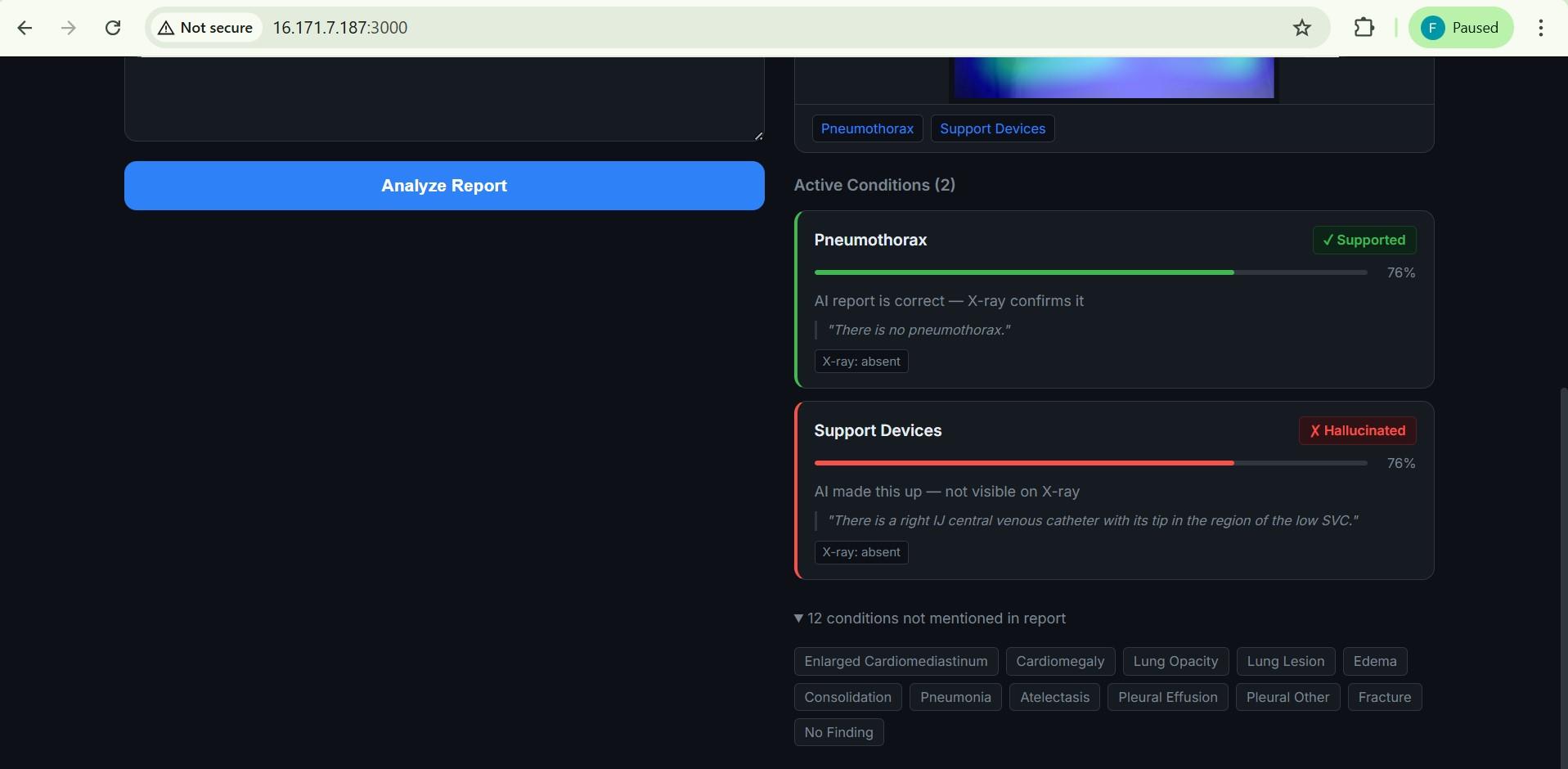
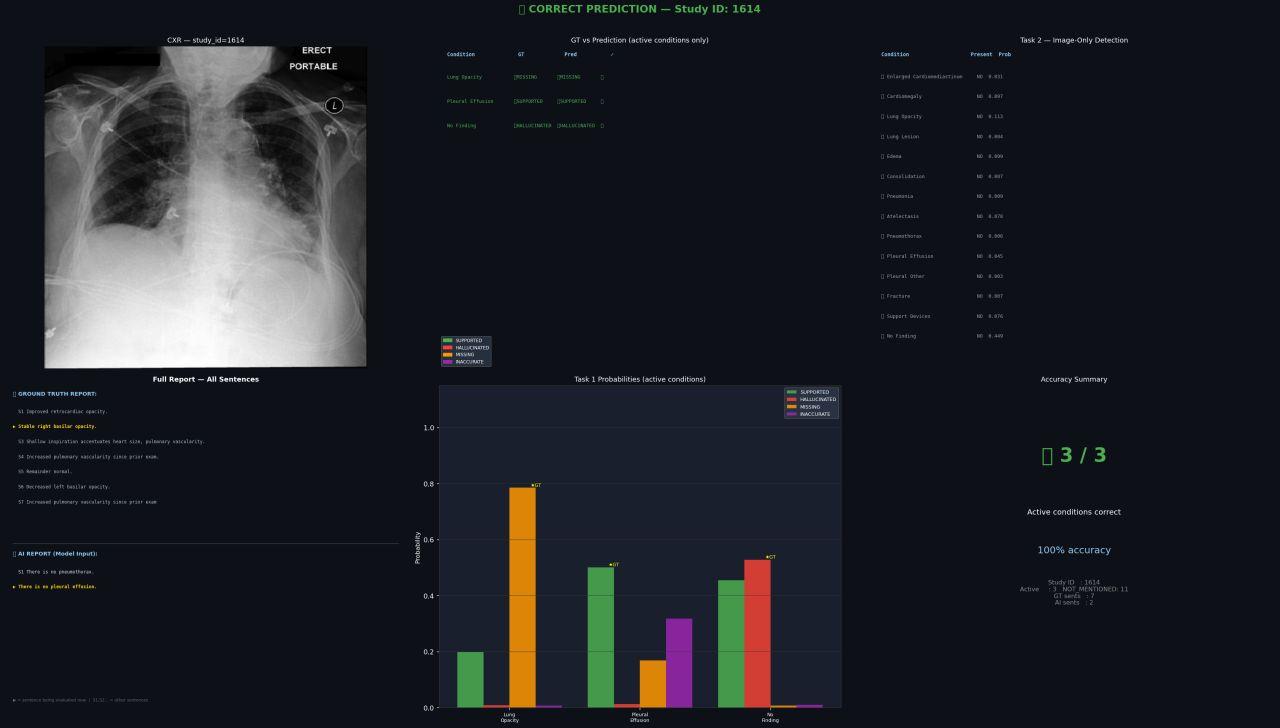
- Designed the public API contract: multipart form-data upload in, structured JSON out (per-condition verdicts, confidence scores, heatmap URLs, ELRRs score), testable through a standalone frontend-test.html harness.
- Trained the production model on a rented RTX 5090 (33.7GB VRAM) via Vast.ai, then fed the resulting checkpoint into the same MLflow-versioned deployment pipeline used for every release.
- Deployed and iterated across 8 shipped versions without downtime to the public demo, each release swapped in behind the same stable API contract.
Tech stack
SWE (AI/MLOps)Medical AIMultimodalComputer VisionNLPPyTorchFastAPIMLOps
Key results
0.6600
Macro F1 (V11)
14
Conditions covered
74,060
Training samples
30,633
Unique studies